Last Night Kristen Jordan Tried Taking $150,000 From Urban Camping Cleanup Efforts To Study Parks Because “Values” – by Travis Mateer

I wasn’t planning on commenting last night at Monday’s City Council meeting approving the budget, but after Kristen Jordan’s “survival camping” bullshit, someone had bring REALITY into the conversation.

What was Kristen Jordan actually trying to accomplish last night?

From what I could tell, Jordan wanted money to study a healthier way of managing weeds in Missoula parks, and to get the estimated $150,000 dollars to accomplish this study, she proposed raiding the Urban Camping cleanup fund.

Here’s the language of her amendment, followed by a clip where the language of toxic empathy is deployed.

Jordan’s colleagues, sensing a DSA tantrum brewing, put on their kid gloves and did their gosh-darn best to see if reason could be used, like asking if Jordan had looked for any grants before trying to take money away homeless cleanup efforts. No, Jordan said, she had not.

What REALLY inspired me to comment, though, was Jordan’s final tantrum where she references “values” in a failed attempt to shame everyone else into feeling bad about ACTUALLY LISTENING to constituents when they compelled our elected leaders to get more assertive with “survival camping”.

Instead of acknowledging her colleagues were responding to the will of their constituents, who have become overwhelmed by the many dangerous aspects of enabling drug addicts at homeless encampments, Jordan frames cleaning up riverbanks and other areas used by “survival campers” as “making sure we don’t see homeless people”.

While these clips are frustrating, Jordan’s day-job with the Montana Conservation Commission makes her perspective on “survival camping” downright confounding, since this commission is worried about water quality, and urban campers aren’t known for being good stewards of the land.

What am I missing here?

The Western Montana Conservation Commission (WMCC) is a uniquely structured non-regulatory organization that works to accomplish its important mandate in a consensus-building manner, stressing education, cooperation, broad-based community involvement, partnerships with agencies and nonprofit groups, and the voluntary participation of western Montana residents. The commission represents a wide cross-section of citizens and local, state, tribal, and federal agency representatives who strive to identify Western Montana’s water quality and aquatic invasive species problems and work collectively to implement the most effective solutions.

The Western Montana Conservation Commission is administratively attached to the State of Montana Department of Natural Resources and Conservation (DNRC) and serves as a convening body to facilitate close cooperation and coordination between federal, state, provincial, tribal, and local resource managers to protect the condition of aquatic and natural resources across Western Montana.

Fun Fact: while not officially recognized in the DSM-5, Trump Derangement Syndrome can be detrimental to cognitive health, but even with those barriers in mind, California was able to determine that pooping by the water ain’t good for it.

From the link:

President Donald Trump, a self-described germophobe, has made no secret of his disgust with California’s growing homeless problem, which he has called a “disgrace” and “inappropriate” and equated to “living in hell.”

“We should all work together to clean up these hazardous waste and homeless sites before the whole city rots away,” Trump tweeted about San Francisco on Oct. 26. “Very bad and dangerous conditions, also severely impacting the Pacific Ocean and water supply.”

San Francisco officials were quick to dispute Trump’s claims. But some of California’s most prized rivers, beaches and streams are indeed contaminated with levels of fecal bacteria that exceed state limits, threatening kayakers, swimmers — and the state’s reputation as a bastion of environmental protection.

Fecal contamination of waterways is a widespread problem and becoming more urgent in states with large homeless populations. In Seattle, homeless people living in RVs are accused of dumping raw sewage straight into storm drains, which flows directly to local waterways. In Oregon, workers cleaning up homeless camps along the Willamette River in Eugene routinely find feces and needles.

If the state of California can admit pooping by rivers and streams is bad, why can’t Kristen Jordan? Is being a leftist THAT cognitively destructive?

Maybe we should just be done with municipal laws and the people who enforce them if enforcement means “criminalizing” the small percentage of people in this valley of 80,000 souls who leave bullet casings next to their used needles.

While we’re at it, let’s stop enforcing Federal statutes related to immigration, then, if we REALLY want to annihilate the social contract and open pandora’s box for true anarchy, let’s reconsider laws against murder, especially for postpartum women who kill their own children, because that’s apparently where we’re at as a society (the kid-killer mom has raised over $700,000 dollars, by the way).

On the immigration front, doing something performative with her municipal power appealed to Kristen Jordan a few months ago when the anti-ICE “movement” was hot, as reported by the Montana “Free” Press:

The resolution Jordan drafted affirms the council’s support of the Missoula Police Department’s policy to “the extent permitted by law, avoid committing city resources to federal immigration actions for which it has no authority,” and states the city and police department will not enter into a partnership with U.S. Immigration and Customs Enforcement, known as a 287(g) agreement.

Jordan said the biggest concern among other council members was that approving the resolution would endanger Missoula’s immigrant and refugee communities, though she said she found academic research showing benefits from such action.

“Most peer-reviewed research shows it makes communities safer when municipalities assert their stance on things,” Jordan said. “The average citizen knows what to expect from police, how they can participate or not and understand how police will handle crowds.”

This quote is particularly funny to me, since “peer-reviewed research” is mentioned in relation to municipalities making hollow declarations that “assert their stance on things”. What the fuck does that even mean?

Before I get to the type of data analysis Kristen Jordan is referring to in regards to refugees and immigrants, I’d like to remind readers that I’ve been interested in obtaining LOCAL OVERDOSE DEATH DATA for many years now, which I referenced recently on X:

Instead of doing what the conservative Discovery Institute is doing for their partisan agenda of using reality against reality-averse liberals, Kristen Jordan probably read something like this and got all tingly:

Do sanctuary policies hamper deportations of noncitizens who threaten public safety? Do sanctuary policies increase crime? These empirical questions are at the heart of a public debate. US Immigration and Customs Enforcement (“ICE”) claims that “in jurisdictions where we are not allowed to assume custody of aliens from jails, …sanctuary cities release these criminals back to the street, [increasing] the occurrence of preventable crimes” (1). The government has often formally relied on this empirical assertion, arguing that sanctuary policies “make all of us less safe because they intentionally undermine our laws and protect illegal aliens who have committed crimes” (2). Immigrants’ rights advocates, by contrast, maintain that sanctuary policies build trust between immigrant communities and the police (3, 4).

This report’s second finding—that sanctuary policies do not increase crime—builds on previous estimates of the effects of immigrant-friendly policies on crime rates. Martinez et al. (ref. 16, p. 9) conclude in a review that “relatively little empirical research examines the impact that local limited cooperation policies have on crime.” Wong (17) shows, in cross-section, that crime rates are lower in sanctuary jurisdictions. Amuedo-Dorantes and Arenas-Arroyo (18) find that sanctuary policies make petitions for legal status under the Violence Against Women Act more likely. O’Brien et al. (10) use a matching strategy to compare crime rates in cities with and without sanctuary policies and find little difference between them. Gingeleskie (19) defines sanctuary policies broadly and finds that such policies instituted between 1995 and 2014 in 32 cities caused about a 7% decline in property crime and had no effect on violent crime. Martinez-Schuldt and Martinez (20) find that the adoption of immigrant-friendly policies across cities between 1990 and 2010 reduced robberies (but not murders).

What’s the problem here? I’ll tell you, because I consider this my local turf, and this is the problem: if investigators and prosecutors are unreliable because politics trumps public safety, then the data being referenced can’t be trusted.

Since I was admittedly triggered when I finally got through to make my public comment, I didn’t reference the “hot shot” overdose deaths of urban campers I suspect are murders in Missoula, or the many “accidental drownings” of mostly women that I suspect are ALSO murders, or the corpse of the possible urban camper found on the Kim Williams trail last November and never officially identified by the Sheriff’s Office, but comment I did because very few members of the public were present last night as the budget bullshit got batted around before the majority pulled out their rubber stamps to pass the budget.

Emotions really can cloud rational thought, like my inaccurate assessment on the phone a few months ago with someone at the Health Department about the Buckhouse bridge encampment cleanup, privately funded by “Shoptown LLC“.

What I was wrong about was the natural reduction of water in the area, which was keeping the last trash landfill water-logged, so that this…

…could be transformed into this:

Of course, like the rest of Missoula, it only looks good if you make sure to NOT look too closely.

What’s the harm of a few batteries, some plastic, and what looks like Fentanyl-scorched tinfoil when the offenders who left behind this material are vulnerable victims of circumstance helplessly stealing bikes while abusing dangerous drugs and getting arrested, then released, to do it all again somewhere else in our “beautiful” community?

With this particular urban camp cleanup being forced onto the bottomline of a private developer, the public doesn’t get to see the price tag of what Jason Rice, representing IMEG, paid Missoula Works (who represent the Christian homeless grift), but we do get to see things like the 2024 990 form of the Missoula Economic Partnership, which lists Jason Rice as one of the players–a connection I thought I had hallucinated after going through so much of Missoula’s incestuous developer community over the weekend for yesterday’s post on the forces shaping Missoula’s future.

If you appreciate the work I’ve done over the years bringing the nitty-gritty reality of “survival” camping to your screen, then please consider donating to my new GoFundMe page because I operate on a shoestring and a prayer.

Thanks for reading!

A Unified Theory Of How Subsidized Land Deals Are Shaping Missoula’s Future – by Travis Mateer

On Friday I listened to a presentation on the Midtown Commons lawsuit that got me thinking about subsidized development, the documentary I made about subsidized development, and the original focus of local angst that emerged in 2019 with how Tax Increment Financing was being proposed to prime the construction of a massive convention center in downtown Missoula.

The two big takeaways that sent me down this latest development rabbit hole is the integral role of the Mayor’s Land Use Task Force in moving forward city-subsidized development projects, and the legal difficulty in getting information from the Missoula Economic Partnership (MEP), a public/private entity hired by the city to make deals.

Before the Mayor established her Land Use Task Force, the rise of MEP was put into context by development cheerleader, Martin Kidston, in this article from 2024:

Over the last five years, the Missoula Economic Partnership has emerged as one of the city’s strongest economic development arms in its work to expand Missoula’s tax base, grow and retain businesses, and help the city achieve its redevelopment goals.

Currently, MEP is working on a number of city-owned properties beyond Scott Street and the old library block. It’s working to market the old Sleepy Inn site off West Broadway, and it helped negotiate a buy-sell agreement on behalf of the city for several Midtown parcels near Southgate Mall.

It’s also monitoring other potential opportunities, including the expansion of the Montana Technology Center on East Broadway, and future redevelopment of the Johnson Street site, which the City Council wants to see redeveloped within three years, as was the intent when the city purchased the property.

When the use of public tax money for private development is being influenced by a public/private partnership, like MEP, it’s important to convince the public that there’s a public benefit, like increased economic activity from, say, a convention center. Another way to convince the public that using their tax money for private development is a good thing is to suggest that serious societal problems, like community issues surrounding addiction and mental health, can be addressed through “mixed use” subsidized development.

Wasn’t that part of the pitch from WGM Group and its elected boosters for developing the Larchmont golf course?

As proposed, the developers would give the county 157 acres located nearby on Highway 93 in exchange for Larchmont Golf Course. The course sits off Reserve Street in an existing commercial corridor near city services, public transportation, public parks and a medical center.

The proposed new golf course sits in an undeveloped field that can’t be built upon given its location to the floodplain. But it could serve as a recreational attraction, according to WGM Group, which represents the developers.

“We wouldn’t be opening this discussion without having a replacement location to bring to the table for Larchmont,” said Jeff Smith, principal engineer with WGM Group. “This idea at its core is a concept to allow working Missoulians to remain in Missoula and not be displaced by the ever-increasing cost of renting or owning a home in Missoula.”

The “core concept” expressed by Jeff Smith, the principal engineer with WGM Group and board member of the Missoula Economic Partnership, is to NOT displace Missoula residents by building a massive housing complex, one that included a “medical center” as part of the public pitch, which ultimately failed.

When you look at other board members at the Missoula Economic Partnership, it should be no surprise that both St. Pats and Community Medical Center are represented:

This impressive grouping of people is why MRA’s leader, Ellen Buchanan, called MEP a “powerful alliance” that is “just getting better” in the article quoted above. Maybe it’s because they find the kind of outside talent aligned with the “values” of playing jurisdictional shell games with public tax money.

As you can see from the highlighted portion of Christina Henderson’s brief bio, she came to her position as Executive Director of the Montana High-Tech Business Alliance ALREADY FLUENT in the language of legal theft that municipalities use by creating special taxing districts.

But don’t take my word for it!

It’s true, Missoula is NOT unique in its use of this municipal subsidy tool, so that makes what other people do in other states, like Michigan, relevant to the culture of BIG BUSINESS panhandling we have a BIG PROBLEM WITH here, in Missoula.

But before I move on to Wisconsin, where Daddy Joe made his millions, let’s look at some of the tech players involving their business brands in the Montana High Tech Business Alliance:

(I’ll come back to Two Bear Capital and Cognizant later in the post)

The Board Chair of the Montana High Tech Business Alliance ALSO serves as the Vice President of Global Communications for Oracle, the company that got CIA money early on before buying up other tech companies, like Right Now Technologies from future Governor of Montana, Greg Gianforte.

My pivot from this global communicator to Nick Checota’s Daddy, Joe Checota, might seem clunky at first, but the influence of Daddy Joe and his son might be more applicable to this network of developers seeking financial handouts than you might think.

When I see the states listed above–California, Florida, Illinois, Michigan, New Jersey and Virginia–I’m pretty impressed with what it must take to operate in those locations, if you know what I mean.

While doing the research for this post I am 99% certain I saw Seth Bodnar’s name at MEP’s website listed as a board member, but when I went back to double-check, Bodnar’s name no longer appeared, though his role at MEP can still be confirmed in past 990 documents.

Weird.

What else is clicking into place with my unified theory of subsidized development besides the obvious use of public tax money and subsequent rationalization that the public will benefit?

Well, in the list of names above, I noticed Bill Calhoun’s name, the St. Pats director who left his position now held by Krissy Petersen, wife of Missoula’s Sheriff, Jeremiah.

Uh-oh!

If there is such a thing as a medical/judicial/subsidized-housing complex, then this power couple could represent an interesting alignment with how TECHNOLOGY is increasingly being deployed against those targeted by the criminal justice system, kind of like the technology I’m wearing on my ankle RIGHT NOW, under the auspices of “jail diversion”.

Who runs the jail? The Sheriff’s Office. And who sometimes runs for Justice of the Peace? A former member of that Sheriff’s Office, one who just happens to be from the same town (Butte) that Krissy Petersen is from, and one of many locations in Montana where data centers are being proposed.

What’s the connection?

If you get on the bench, as a judge, then you get to be a part of directing the system that operationalizes Big Data, like GPS info, which CRAZY people (like me?) could require to keep the crazies in line. If an addiction or mental health diagnosis can be applied, even better.

But, again, don’t take my word for it, here’s what Bill Burt suggested he could do as an elected Justice of the Peace:

Before this post gets too long, I just realized I haven’t even introduced readers to the Mayor’s Land Use Task Force yet, so here they are:

Some of the players developing Western Montana aren’t immediately identifiable on a list like this, but with a little curiosity plus the cojones to map out these players, a name like “Wishcamper” might appear–the developer who helped buy and transition a literal mountain for Missoula County because he’s such a nice guy (and very wealthy).

The Wishcamper name came up when I started looking through development projects featured on the “Housing Partners United” website, where I found Fire Tower Apartments, in Helena.

To bring us closer to the development finish line, who’s ready for some BASEBALL?

I’m bringing up baseball because, while researching this post, I realized that one of the only other types of development projects that scales like a convention center, a medical facility, or a heavily subsidized affordable housing complex next to a jail is…a baseball stadium! And that’s why the name “Ellis” got my attention.

Instead of guessing wrong on what possible relationship exists between Matt Ellis and Courtney Ellis–the latter being a member of Mayor Davis’ Land Use Task Force now, and the former being involved in pushing for the baseball stadium–I’ll reference the notes of an MRA meeting intended to bailout investors in the baseball stadium fiasco that caused local investors to freak out when their main money man, Hal Chase Fraser, unexpectedly died while holding the figurative money bags.

Here is who attended that 2011 MRA meeting, along with a few juicy excerpts that emphasizes how long the public piggy bank has been getting tapped by these money-addicts while they wonder if the public can be bought off with cheap ticket sales for baseball games, like former Missoula Mayor, Daniel Kemmis, explicitly suggests:

For more context on this part of Missoula being developed for people with deep pockets, it looks like Brad McCall, who is a part of the Land Use Task Force, is getting his piece of the pie.

Good for you, Brad!

Screenshot

One thing I bet the public would NOT push back on is a “solution” to the rampant drug addiction destroying multiple major cities, including adding to numerous issues in Missoula, so to really finish us off, here’s a screenshot of a money-shot about the company developing a protective anti-Fentanyl shot, with a little help from Two Bear Capital:

In my vision of the future trajectory for large-scale development in Western Montana, including data centers like Krambu, who’s ideal client would be “focused on biomedical studies“…

“Wood said his ideal client for the data center would be companies focused on biomedical studies, but he might not be able to find someone like that…”

…it’s going to be the public/private nexus of subsidized development surrounding technology, biomedical services, and the overlap of addiction and criminal justice reform, that will help shape this region’s future growth.

Creating healthier communities is entirely possible WITHOUT using tax subsidies to pad the profit-margins of developers, but getting there would require a radical departure from the political tribalism and paycheck protectionism that ensures regular people stay docile in their passive voting strategies. How’s that been working for y’all?

Anyone focusing on the CANDIDATES in Montana’s Senate race are, in my opinion, focusing on the wrong thing. Even focusing on just the money won’t work, because this is what following the money actually looks like:

Instead of seeing this chart and feeling demoralized, perhaps us regular people should look at this chart and see it as the boiled-down expression of DESPERATION and FEAR from the Epstein class that I believe it is.

But, again, don’t take my word for it.

If you appreciate a local, non-partisan focus so threatening to local elites they’re ankle-tracking my every movement, then please consider donating to my new GoFundMe page. Any little bit helps.

Thanks for reading!

CORRECTION: It’s Hal Fraser, not Hal Chase, but I left the original mistake because the same would be nice when paid local media mis-report on ME.

Will Montana Lawmakers Who Visited Minnesota Defend The Anoka County’s Prosecutor Pimp? – by Travis Mateer

Did you know the diminishment of ONE person’s rights is a diminishment of EVERYONE’s rights? That’s what a Montana lawmaker said to local media earlier this year after traveling to Minnesota for a day of solidarity.

Morigeau tells MTN that federal enforcement has created fear in communities and in our country. He says what’s happening in Minnesota represents a broader threat to constitutional rights that could impact all Americans, including Montanans.

“We can’t remain idle because the diminishment of one person’s rights is a diminishment of all of our rights. And I think if we remain idle and stand on the sidelines, people are gonna continue to chip away at those rights, and eventually, what happens when you chip away at rights over time, you have none,” Morigeau said. “And so I do think um our basic dignity is at stake and standing in solidarity says you’re not gonna take these rights from us that are guaranteed to us under our Constitution.”

What were Montana lawmakers warning the nation about? ICE ops? Somali fraud? How about a potentially corrupt female prosecutor arrested for allegedly pimping out other women for sex work?

A former Assistant Anoka County Attorney was arrested and charged Friday with more than two dozen crimes connected to an alleged commercial sex trafficking operation that spanned several years.

Andrea Leigh Sampson, 35, is charged with 13 counts of promoting prostitution and 13 counts of receiving profits from prostitution after the Minnesota Bureau of Criminal Apprehension (BCA) and the Human Trafficking Task Force uncovered an alleged sex trafficking operation within Minneapolis, Bloomington, Eden Prairie, St. Louis Park and other surrounding areas.

According to the charging documents, the operation alleges that numerous individuals, including Sampson, obtained apartments for “commercial sex transactions.” Law enforcement later learned that some of Sampson’s properties were allegedly used for some of those transactions, and where photographs of the victims were taken for commercial sex ad postings.

In a statement, Anoka County Attorney Brad Johnson confirmed that Sampson had been the Assistant Anoka County Attorney and was working in the office’s Family Law and Civil Divisions, but said she was immediately placed on administrative leave when his office was made aware of the investigation in February 2026. Her last day of employment was March 9, 2026, the statement reads.

If Montana lawmakers want to help protect Constitutional rights in their own state, maybe they should pay attention to Missoula’s troubled prosecutor, Keithi Worthington, and the investigation into Keithi, which hasn’t been made public, or even shared with the Municipal judges, necessitating the need to litigate instead:

Three sitting Missoula Municipal Court judges are suing the City of Missoula, Mayor Andrea Davis and City Attorney Keithi Worthington, saying the city is wrongly withholding a full investigative report tied to the judges’ complaints about Worthington’s conduct.

The lawsuit, filed June 29 in Missoula County District Court, was brought by Judges Jennifer Streano, Jacob Coolidge and Eli Parker, along with Court Administrator Kari Dady. Davis and Worthington are named as defendants only in their official capacities.

In official minutes I found online from last year, the female head of Missoula’s two-headed civil/criminal prosecuting team opened her law-school-educated mouth to express her alleged concern for Constitutional rights, but not in the way you might expect:

Instead of wanting to PROTECT these Constitutional rights, like my first amendment right to use offensive language to refer to a deceptive prosecutor as, say, a lying cunt, what Keithi Worthington is suggesting in her comments to City Council is that VICTIMS RIGHTS should supersede Constitutional rights.

Is that what Cohen v. California intended to protect half a century ago?

Cohen v. California, 403 U.S. 15 (1971), is a landmark decision of the US Supreme Court holding that the First Amendment prevented the conviction of Paul Robert Cohen for the crime of disturbing the peace by wearing a jacket displaying “Fuck the Draft” in the public corridors of a California courthouse.

The Court ruled that displaying a mere four-letter word was not sufficient justification for allowing states to restrict free speech and that free speech can be restricted only under severe circumstances beyond offensiveness. The ruling set a precedent used in future cases concerning the power of states to regulate free speech in order to maintain public civility.

To better understand how victims rights can legally wiggle ahead of those antiquated rights about “free speech”, here’s a screenshot from the Montana Department of Justice explaining all the ways victims will be supported, even if they are abusing the system by making false reports after being awarded a civil restraining order in a process where the accused does NOT get a lawyer, while the alleged victim gets help from the Crime Victim’s Advocate office.

In assessing if one is a victim of lawfare, like I believe I have been for 3 years, one statute in Montana Code Annotated that doesn’t get enough attention is the one about filing false reports to law enforcement.

Through discovery in a previous case against me I have learned that there have indeed been official reports made to law enforcement about me that were later proven to be inaccurate, therefore NOT prosecuted by city or county attorneys, but the person MAKING those false reports has been allowed to continue this unchecked behavior, despite a clear statute in the law.

If you want to see how that statute functions in the real world, the Missoula County Attorney’s office showed they ARE actually aware of this law by recently charging someone with making a false report, resulting in three men being held at gunpoint at Southgate Mall, according to the charging documents:

While the city of Missoula gets sued left and right amidst a heated budget season, I’m going to keep demonstrating why the local power structure is so invested in shutting me up by putting the finishing touches on my unified theory of subsidized development shaping the future growth of Western Montana, coming tomorrow.

If you’d like to help the brokest, most genuine independent voice in this liberal mountain college town, please consider donating to my new GoFundMe page. The recent $40 dollar donation puts my grand total at $500 dollars from 10 donations, and every dollar is greatly appreciated!

Thanks for reading!
The Poverello Center’s Failed Good Neighbor Policy – by Travis Mateer

As the first and most effective coordinator of the Poverello’s Homeless Outreach Team, I was instrumental in helping transition the notorious shelter from downtown Missoula, where business leaders were VERY EAGER to see us move, to its current location on West Broadway.

To engineer community acceptance of this move, we used the National Coalition Building Institute and its director at the time, Amie Thurber, turned her work on this project into her master thesis, titled “Housing A Homeless Shelter: A Case Study In Community Deliberation”. Here’s a quote from Thurber’s dissertation (PDF) describing the effort to convince this neighborhood that the problems they are experiencing now wouldn’t be happening:

Theories of deliberative democracy have a number of strengths when applied to settings of community conflict. Deliberative processes may legitimize decision making; even when people object to the final outcome, they are more likely to accept decisions if their perspectives have been thoughtfully considered (Freeman, 2000; Guntmann & Thompson, 2004). Further, the deliberative process is consistent with democratic values. In seeking perspectives from those who will be impacted by the decision – as opposed to simply imposing a decision – a group, organization, and/or government demonstrates respect for its members. Further, when members thoughtfully consider one another’s positions, they demonstrate respect for one another (Guntmann & Thompson, 2004).

It wasn’t easy convincing community members that we would be good neighbors, but with Amie Thurber’s ability to systematically create the illusion that local leaders were NOT just pleasing the downtown business community by shifting this problem to a poorer part of town, the initial move appeared, at first, to be a huge propaganda success, accomplished in 4 key phases of manipulation:

NCBI launched a four-phase process. First, we completed an assessment through individual interviews and focus groups. Second, we facilitated an open community meeting that focused on creating opportunities for participants to share with and learn from one another. Third, we led a work group process where a small group of representatives from various stakeholder groups vetted specific sites. Finally, we facilitated a final open community meeting where the public deliberated site alternatives before the Poverello Center made its final decision.

Since none of the other locations were really viable, my perspective on this process is that it was mostly performative–what Epstein’s pal, Noam Chomsky, might call “manufacturing consent”–and guess what? For awhile, it worked!

Unfortunately, reality caught up to my former employer, and now they are deploying a strategic face to do the first round of damage control.

Emily Gibson, formerly Emily Bentley, is the wife of Matt Gibson (killer of Missoula’s alt-weekly), and it was Emily who stepped up to the mic on Wednesday, not the person actually running the shelter. I guess Jill Bonny, who Council was told had other meetings to attend, couldn’t clear her schedule to make a direct plea to keep over $200,000 in city taxpayer money.

The first clip above features Emily Gibson’s stuttering defense of the program I effectively led from 2010 to when I left my position in February of 2016. The second clip below features claims of cleanups and a description of the failed “good neighbor policy” that I was responsible for instituting during my time working at the shelter.

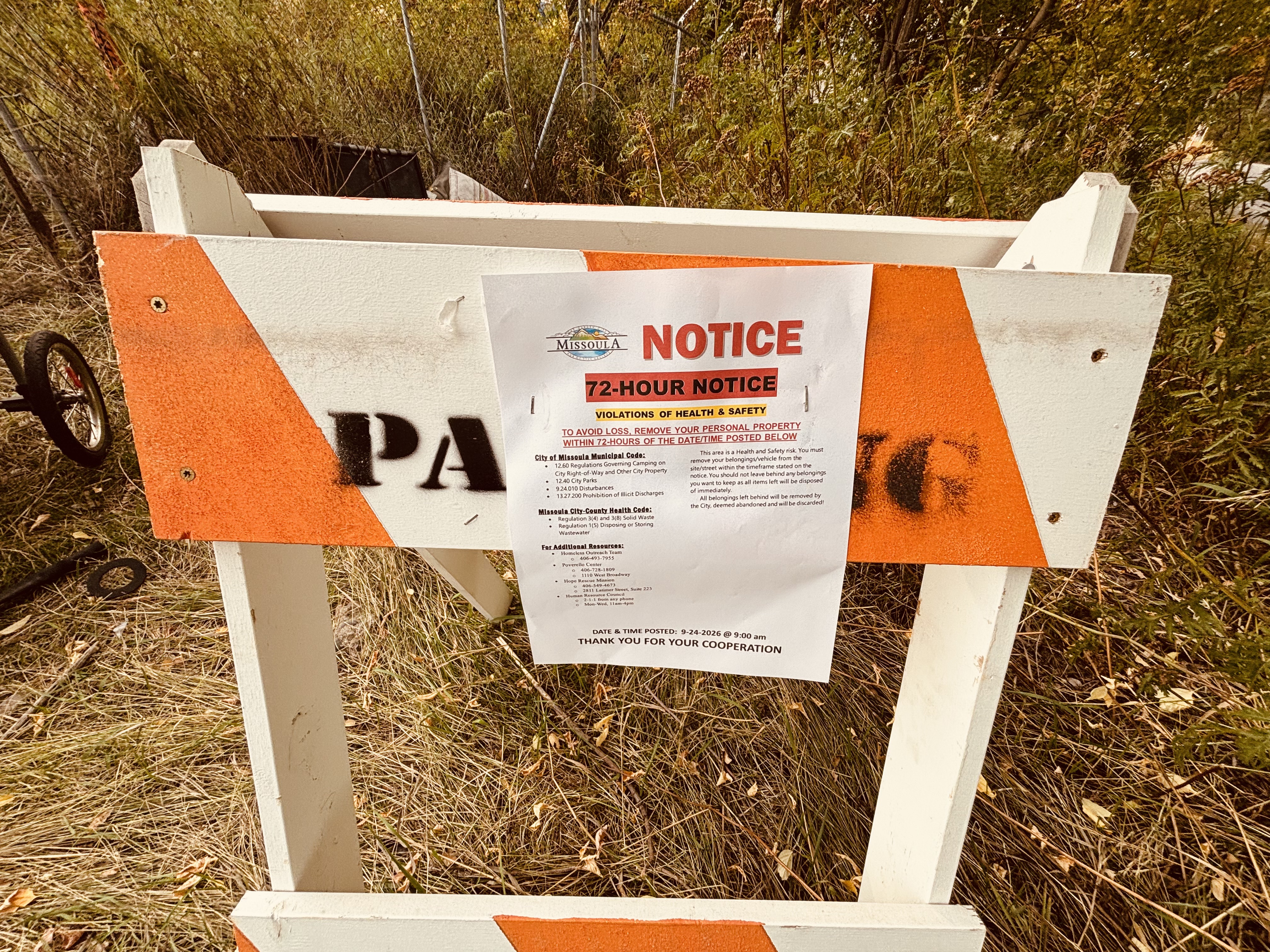
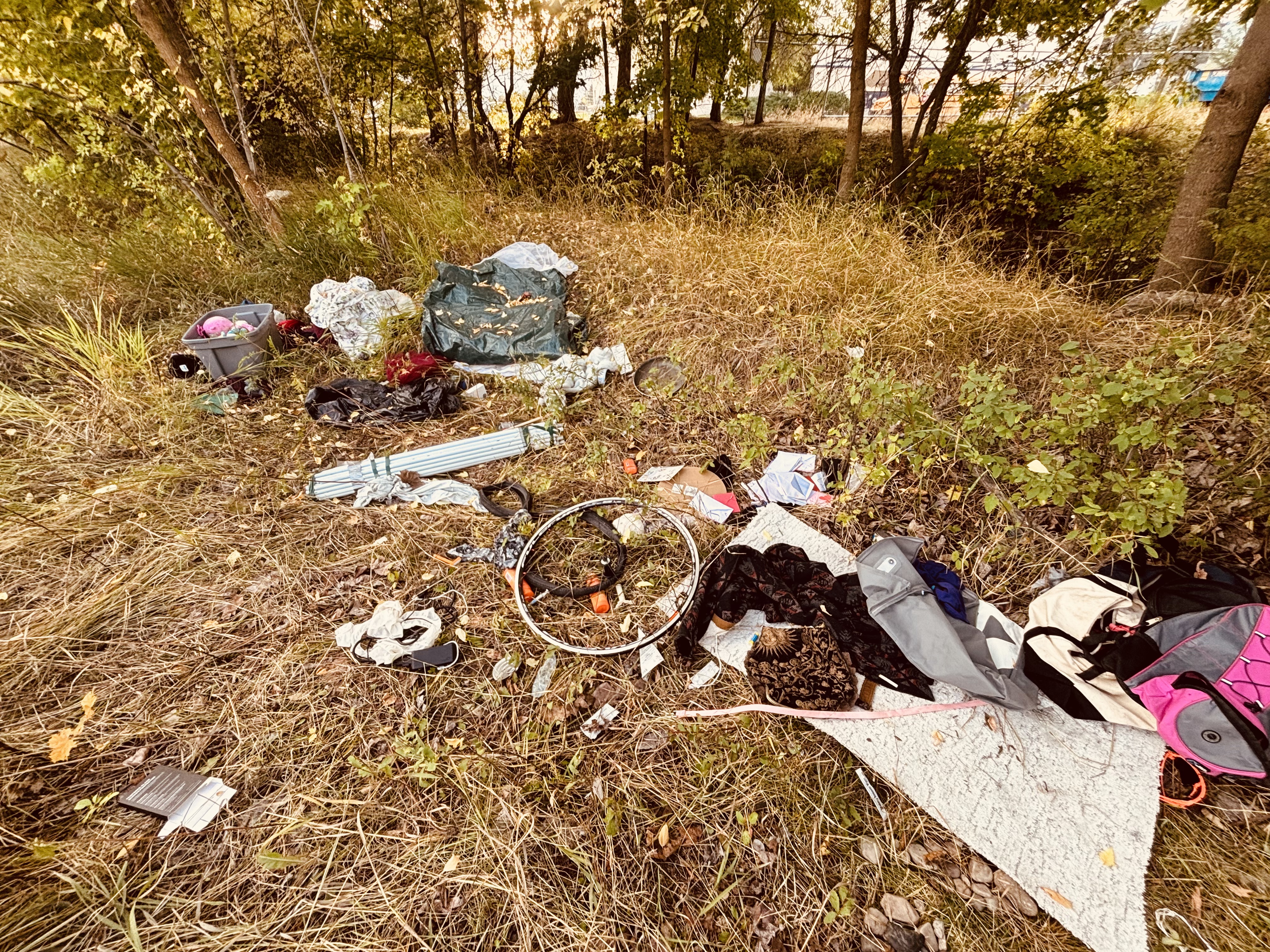
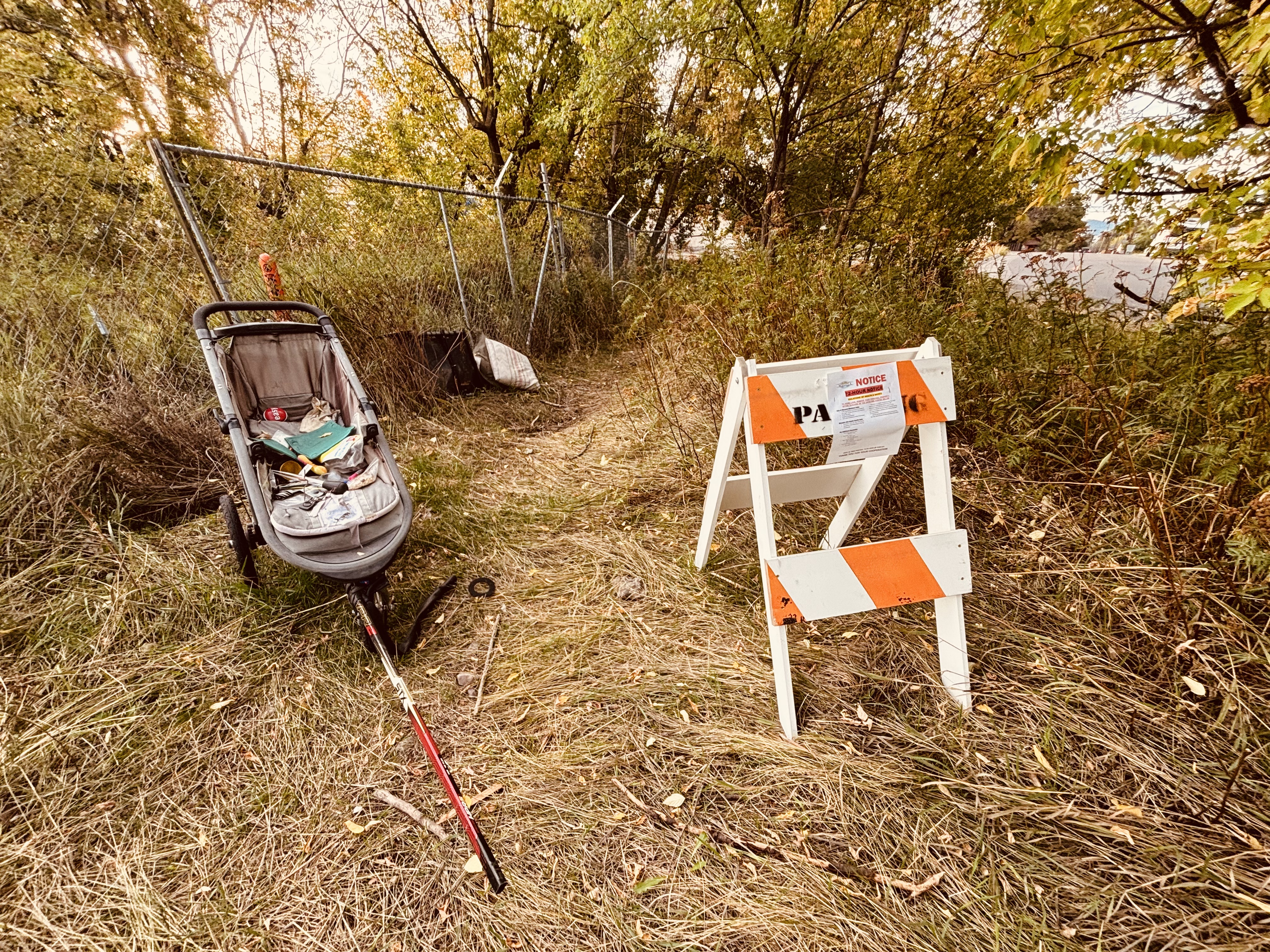
When I walked the West Broadway Island on Thursday, just one day after Emily Gibson successfully defended Bob Campbell’s defunding attempt, what I found included needles in proximity to bullet casings and shotgun shells, burned grass, and some books for those idle hours NOT completely high on drugs.

Is this ok?

Needles, bullets, books, stuffed animals, and a rainbow slinky. This is the kind of trash one finds in a retarded town like Missoula.

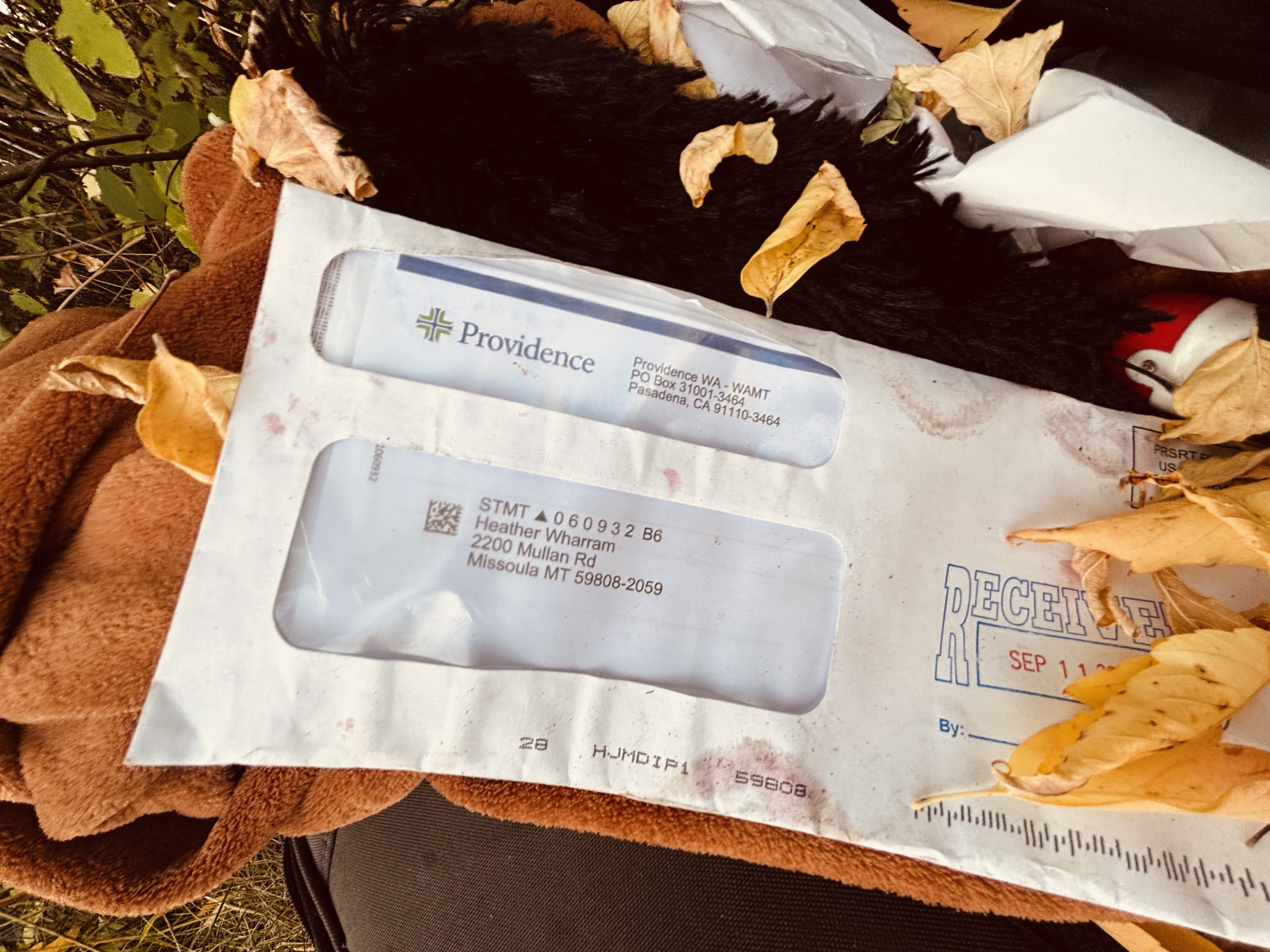
As a practicing trash alchemist, I am able to take pieces of trash and make fascinating connections, like finding a piece of discarded mail to give me a better idea of who is living out here, which could come in handy in cases of murder and arson.

Willing to pay it forward? How about just cleanup after yourself, Candise, so that the 80,000 other people living in this valley don’t have risk their health taking a walk by the fucking river?

For a more visceral feel for what it’s like to be in closer proximity to my former employer, here’s a brief clip I recorded yesterday of me on my bike listening to a woman scream FUCKING FAGGOT while walking from Hawthorn street to Cedar street, where Bob Campbell warned citizens in this town NOT to go on Wednesday.

One of the most shocking parts of the conversation about my former program, though, got framed as an example of SUCCESS, and that’s the role of delivering meds, including anti-psychotic medication, to homeless people all around Missoula.

Are you fucking kidding me?

At risk of stating the obvious (because maybe it’s not obvious to functional idiots), holding other people’s medication–ESPECIALLY if any of that medication can be abused recreationally–is not just DANGEROUS, it’s legally dubious, and not something that should be done unless part of a very specific treatment plan with an end-goal of getting someone OUT of the situation they’re in.

Also, if you are employing “peer support”, meaning someone in recovery working with other addicts, this could have VERY BAD effects, as evidenced by two people I’ve unfortunately covered recently, one of whom I connected to the death of Joey Thompson three years ago.

I agree with Bob Campbell that actions speak louder than words, so as words continue bouncing around virtual spaces about how awful and disgusting I am, the evidence proving the accuracy of my warnings continues to mount.

So donate if you can, and thanks for reading.

At Bitter Budget Battle, DSA/Non-Profit Guy Shakes His Money Rattle – by Travis Mateer

Yesterday’s Budget and Finance Committee meeting lasted over 5 hours, but it was a public comment made in just the first 15 minutes that got my attention.

Why?

Because, as you will see, no one can make the word “values” sound like an extortion racket like a non-profit/DSA foot-soldier:

Dylan Wells works for the Front Step Community Land Trust, one of Missoula’s MANY non-profits that must follow certain rules in order to maintain their tax-exempt status, but those rules are admittedly “murky”, which is why a non-profit that helps non-profits (Headwaters Foundation) provides information like this:

Lobbying can be a powerful tool to advance your mission and amplify the voices of the communities you serve. But nonprofits often find themselves navigating a murky area between advocacy and compliance. “Can we say this?” “Will this jeopardize our tax-exempt status?” If this sounds familiar, you’re not alone! Nonprofit leaders across the country share these concerns. The good news is that nonprofits can engage in lobbying, as long as they follow the rules.

Tax-exempt nonprofits can lobby, but the IRS says it cannot be a “substantial part” of a nonprofit’s activities. What does “substantial” mean? Unfortunately, the IRS doesn’t give a clear answer, which is why many nonprofits who wish to lobby choose to file for the 501(h) election.

Yeah, sure, “rules” exist, but what I’m going to show today is that the rules don’t stop the incestuous nature of Missoula’s non-profit scene in any meaningful way, starting with Dylan Wells and his work with the DSA:

While most readers will naturally focus on the content, it’s the location of these DSA meetings that one must scrutinize, since “Goodworks” is a Mary Stranahan project, and Sparkplug Mary is ALL OVER Missoula’s non-profit ecosphere.

…is the founder of Goodworks Ventures and the High Stakes Foundation. As a result of attending a Play Big Session about a decade ago, she made the decision to leverage her resources to support the people making a positive change in Montana. Her focus is on triple bottom line investments in the for profit arena and rural economic development, leadership development and environmental policy issues in the nonprofit arena. A passionate lover of place, she has a wicked backspin on her tennis game.

I found Mary Stranahan’s name most recently on the 990 form for A Better Big Sky, the Stacie Anderson dark money political slush fund feeding other non-profits, like Forward Montana and MontPIRG.

Going back to Front Step Community Land Trust, where young Dylan works, a name from their 990 form (when they operated under the name North Missoula Community Development Corporation) got my attention, since Alice Boyer ALSO works for Forward Montana, and recently tried to out-queer a critic of their “non-profit” political influence campaign:

Forward Montana and MontPIRG both work specifically with young people, and young people are particularly susceptible to DSA outreach, which is why it probably seems like a natural fit for Sophie Moon to work at MontPIRG while ALSO being a proud member of the DSA:

While Sophie Moon is passionate about young people and serving wine (a dangerous pairing if those young people are under the age of 21), it’s the honing of “communication skills” I’m more interested in, since the question of how our local officials communicate ended up being a big part of yesterday’s budget conversation when one of Bob Campbell’s half-dozen budget amendments focused on defunding the Mayor’s social media enhancement allocation:

All this talk about communication, social media, and money as speech in this post-Citizens United information landscape is pretty useless, if you ask me, when First Amendment protections no longer apply, and for me they don’t.

Another part of Bob Campbell’s effort at “cost saving” yesterday focused on my former employer, the Poverello Center, and the program that I was the first coordinator of, the Homeless Outreach Team, but it’s not the drama that played out between Bob and Emily Bentley that raised my eye-brow, it’s what I found when I went to look for the Pov’s board of directors, which is no longer available at their main website.

I wonder why?

Adrienne Tranel?

Yes, Adrienne Tranel has been on my radar since I looked into her husband, Ben Davis, and his desire to politically pivot from “helping the children” after leaving his private security work with a guy named Matt Epstein and a former spook named Janice. Oh, and Adrienne’s sister, Monica Tranel, lives up Pattee Canyon, unlike Rob “China lover” Chaney, who I mistakingly said was another notable Pattee Canyon resident when his residence is in the other notable Missoula neighborhood, the Rattlesnake, where Missoula’s billionaire, Denny Washington, has a home (thanks for the correction, Pete!)

What I’m doing by mapping out the influence of the this non-profit/political/government nexus of incestuous influence COULD be of interest to conservatives in Montana if they weren’t so pathetically inept in waging counter-information-ops against their better armed, slicker styled adversaries and their largely successful approach to mind-fucking economic captives of today’s Polymarket economy.

For evidence of this ineptitude, here’s Jake Eaton talking on X about conservatives getting daily trounced by the Daily Montanan, Montana Free Press, and other media platforms that overpower the political right, especially with their talk-radio guy, Aaron Flint, going full MAGA for a job in the swamp.

Instead of writing to benefit conservatives, I write to educate locals, and it’s this dedication to keeping a local focus that I think will have increasing value as I work on protecting my First Amendment ability to do what I’ve been doing since 2010. If you would like to help out with that pro se effort, my new GoFundMe page will happily take your digital dollars.

Thanks for reading!