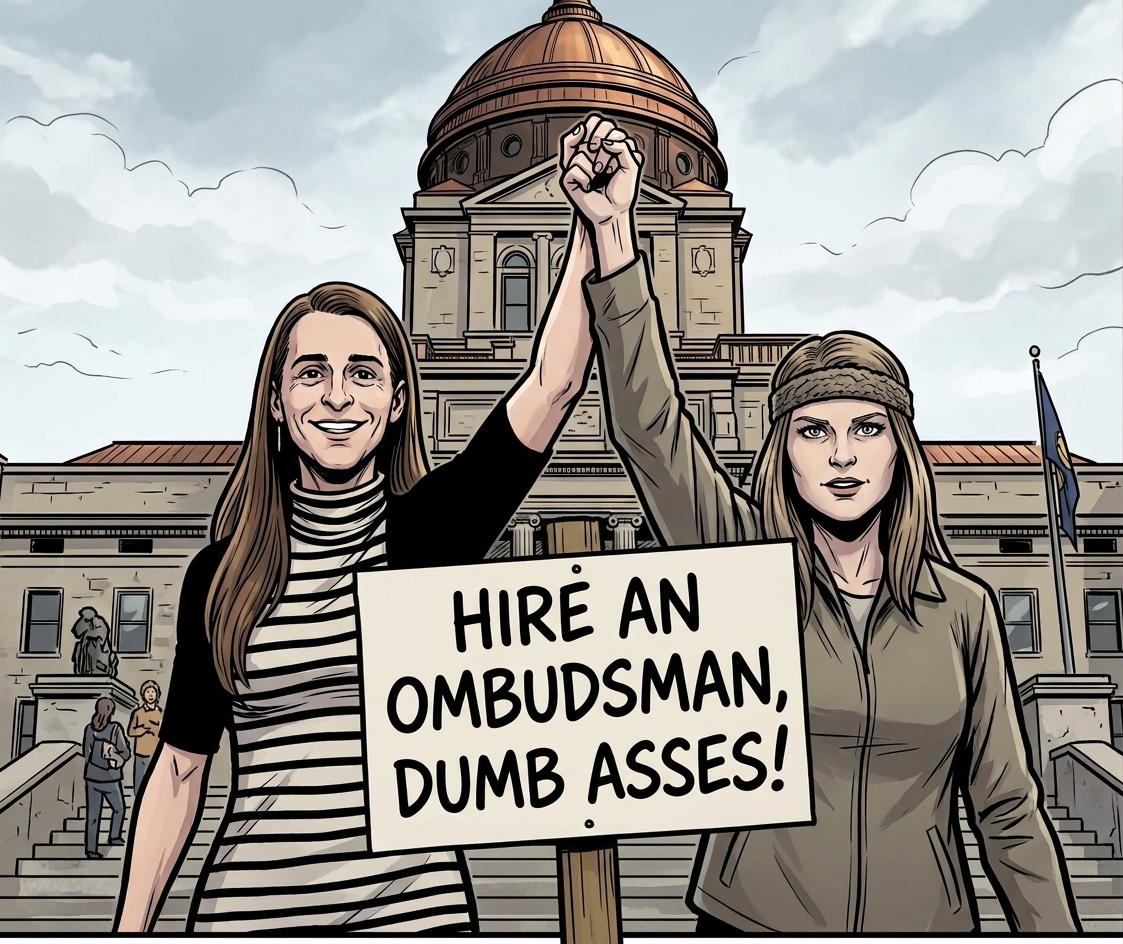
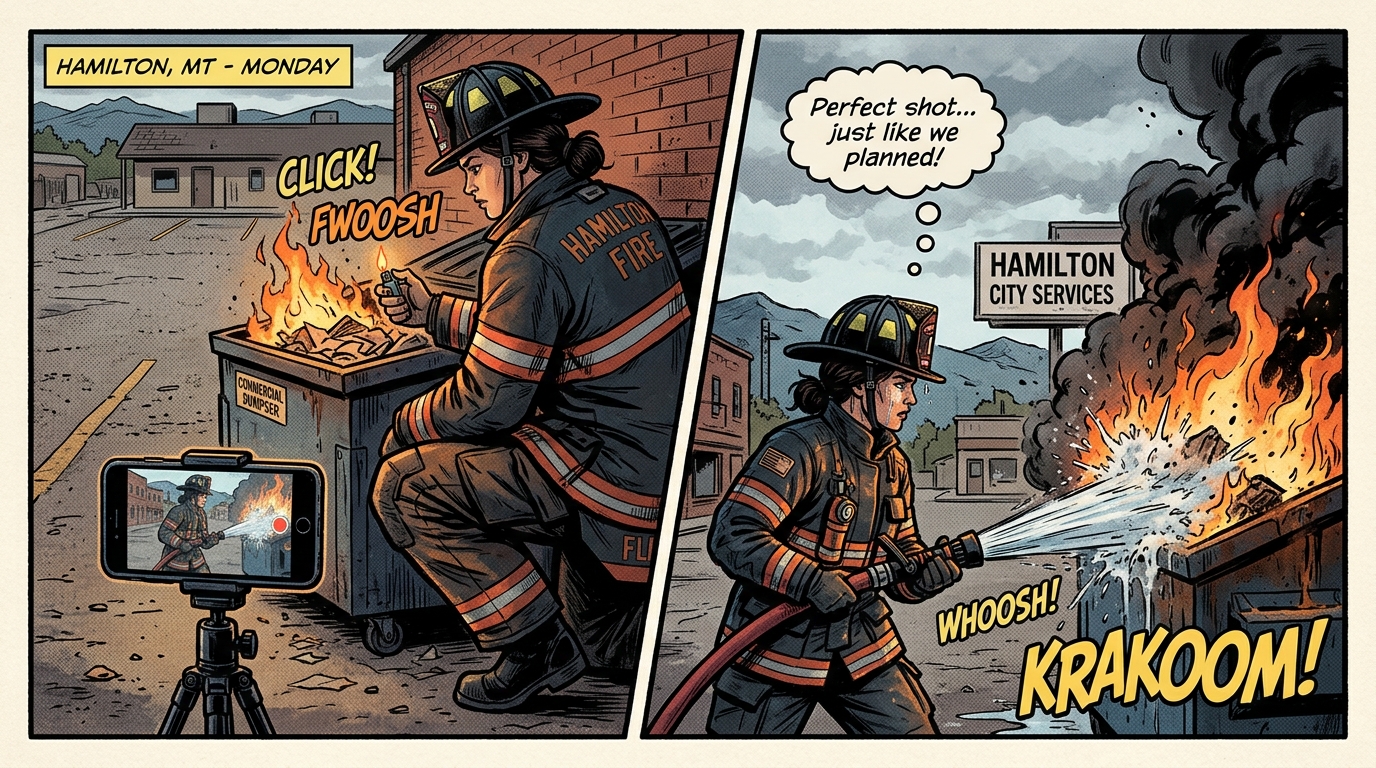
For those who don’t know the reference to the dead/alive cat in the title of this post, here’s the Wikipedia breakdown:
In quantum mechanics, Schrödinger’s cat is a thought experiment concerning quantum superposition. In the thought experiment, a hypothetical cat inside a closed box may be considered to be simultaneously both alive and dead while it is unobserved, as a result of its fate being linked to a random subatomic event that may or may not occur. This experiment, viewed this way, is described as a paradox.
The paradox for local reporters tasked with accurately reporting the claims of a candidate like Alani Bankhead is that, absent evidence, it’s very difficult to determine what’s actually true regarding her recent flip-flop, or “pivot”, on whether or not offers were made to drop out of the race.
Here’s how a Lee Enterprises article dances around the fact that Alani Bankhead apparently lied months ago when she denied that any offers were made to get her to drop out of the Senate race:

The Democratic nominee for Montana’s U.S. Senate seat has claimed she was offered a job with the national political party in exchange for dropping out of the race, a major messaging pivot for the candidate who for months has denied receiving such a formal overture.
In an interview aired last week on Montana PBS, Alani Bankhead alleged she was approached with a proposal: exit the Senate race to clear the way for independent candidate Seth Bodnar and she’d land a job with the Democratic National Committee.
“They offered (me) to be … the DNC’s head of female veteran candidates or something like that,” Bankhead said in the segment. “And I was like: ‘Why would I go work for an organization that is actively working against me and stabbing me in the back?’”
What other words have been used instead of LIAR to describe the Bankhead “pivot”? In MTPR’s coverage I found words like “twist” and “bizarre” from the Rob/Sally/Seaborn team analyzing the campaign’s “remarkable reveal” last week:


Perhaps the coy nature of the Bankhead campaign’s last meow comes from a potential investigation that the Attorney General, Austin Knudsen, is threatening to undertake after the “just not relevant” claim from Bankhead hit local media:
“This is extremely concerning,” Knudsen wrote. “If this is true, it appears to be a violation of Montana Code Annotated 13-35-221. My office will be reaching out to @AlaniBankhead, @SethBodnarForMT and @DNC to investigate.”
The section of state law Knudsen cited prohibits anyone from offering someone a payment or anything of value “to refrain from or to cease being a candidate.” The law says a violation of that section is a misdemeanor, and that an attempted violation is itself a violation.
A spokesperson for the Attorney General’s Office declined to comment further on Knudsen’s statement.
Going back to the Sally/Rob/Seaborn MTPR coverage, I think this exchange between Rob and Sally comes closest to calling Alani Bankhead a liar while also reminding voters of who will ultimately benefit (Kurt Alme) from this late October surprise:

Before I get to the last set of claims dropped by a former Bankhead insider spilling the beans about the candidate he worked for, here’s some of the context I’ve assembled since June, when Alani Bankhead refused to play the Democrat political game and bow out like Democrat candidates did in other states:
“What Kind Op Is Alani Bankhead?” (June 16th, 2026)
“The Doomed, Sexist Alani Bankhead Campaign For U.S. Senate” (July 1st, 2026)
“Alani Bankhead’s Strategy Shifts From Anti-Epstein LARP To Playing The Female Victim Card” (August 12th, 2026)
“It’s Not A “Syndrome” If You’re An Actual Imposter” (October 5th, 2026)
With all this context in mind, including my strong suspicion that Alani Bankhead is a covert Christian Conservative who never intended to win this race, here’s what an insider is saying about the candidate he was working for, emphasis on was:

While this depiction of Bankhead’s behavior around the time that the PAC money dropped is bad, it’s the idea that Bankhead thinks there’s an “underground army” of sex abuse victims in her corner that really bothers me.

The problem of NOT getting paid also bothered this political operative, along with Alani Bankhead apparently NOT giving a shit that an abusive foreign nation–which protects pedophiles and meddles in America’s political campaigns–is busy enacting a religious genocide against poor brown people.

My only beef with this guy is the idea that Democrats “deserve to know” anything about the reality they ignore in order to avoid cognitive dissonance so they can keep voting, because they don’t.
What Democrats deserve from this political cycle is a loss so obvious and embarrassing that it breaks the back of “identity” politics for good and ends the cynical manipulation that seduces well-meaning people into being bamboozled by factors, like GENITALIA and SKIN COLOR, as compelling characteristics worth prioritizing in a candidate over other factors, like asking the question “is this candidate a LIAR who LIES without regard for reality?”
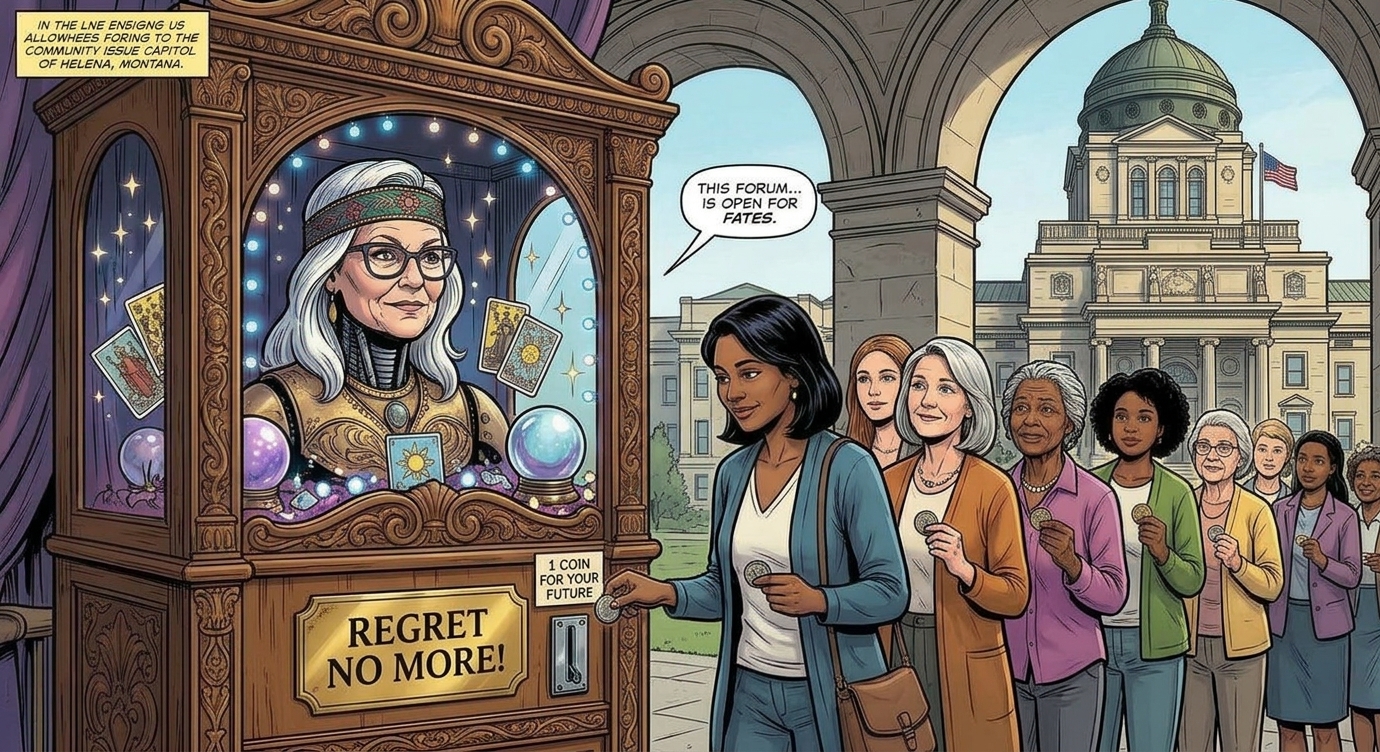
The other option for Democrats who don’t want to acknowledge what’s going to happen on November 3rd is this: just continue ignoring consensus reality and FULLY EMBRACE the Schrödinger-like power of female candidates, like Alani Bankhead, because their biological evolution has bestowed a truly wondrous power upon them called “female solipsism”.
Here’s how it works:
While the controlled demolition of civil society continues along its ordained path (the socially-engineered one designed by the psychopath class) I hope enlightening content, like the video above, can help targeted victims of lawfare depersonalize the legal process of personal destruction because this legal lawfare process has absolutely produced casualties, like Aaron Swartz, who I wrote about two years ago as the information platform he co-created, Reddit, featured commentary on ME and my Lego story telling chops.
One final note before concluding today’s post: criticizing Alani Bankhead is NOT an endorsement of her opponents, who I will NOT be voting for, since I will be casting ZERO votes this election cycle. Until lawfare is properly defined, acknowledged as a serious problem, and people with resources start fighting back against this tactic, I believe the FIRST AMENDMENT in this country is effectively DEAD, which the prosecution of me for being on campus on June 15th to cover the Alani Bankhead press release effectively proves.
If only I was one of those COOL citizen journalists, like Nick Shirley or Roseanne Barr, maybe I’d be getting more financial help for sacrificing my freedom in order to expose corruption in this retarded CIA retirement town.

But I’m not, so donate here if you can.
Thanks for reading!