
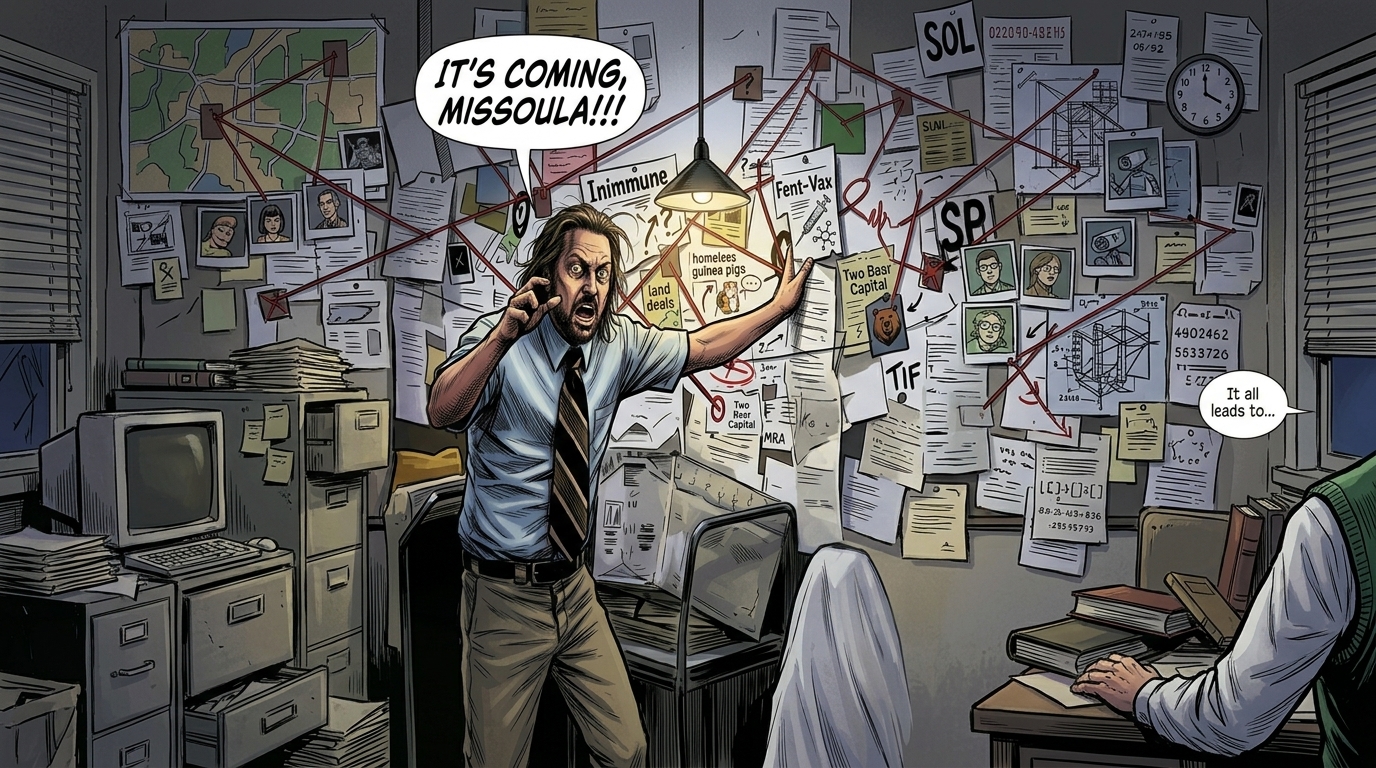
On Friday I listened to a presentation on the Midtown Commons lawsuit that got me thinking about subsidized development, the documentary I made about subsidized development, and the original focus of local angst that emerged in 2019 with how Tax Increment Financing was being proposed to prime the construction of a massive convention center in downtown Missoula.
The two big takeaways that sent me down this latest development rabbit hole is the integral role of the Mayor’s Land Use Task Force in moving forward city-subsidized development projects, and the legal difficulty in getting information from the Missoula Economic Partnership (MEP), a public/private entity hired by the city to make deals.
Before the Mayor established her Land Use Task Force, the rise of MEP was put into context by development cheerleader, Martin Kidston, in this article from 2024:
Over the last five years, the Missoula Economic Partnership has emerged as one of the city’s strongest economic development arms in its work to expand Missoula’s tax base, grow and retain businesses, and help the city achieve its redevelopment goals.
…
Currently, MEP is working on a number of city-owned properties beyond Scott Street and the old library block. It’s working to market the old Sleepy Inn site off West Broadway, and it helped negotiate a buy-sell agreement on behalf of the city for several Midtown parcels near Southgate Mall.
It’s also monitoring other potential opportunities, including the expansion of the Montana Technology Center on East Broadway, and future redevelopment of the Johnson Street site, which the City Council wants to see redeveloped within three years, as was the intent when the city purchased the property.
When the use of public tax money for private development is being influenced by a public/private partnership, like MEP, it’s important to convince the public that there’s a public benefit, like increased economic activity from, say, a convention center. Another way to convince the public that using their tax money for private development is a good thing is to suggest that serious societal problems, like community issues surrounding addiction and mental health, can be addressed through “mixed use” subsidized development.
Wasn’t that part of the pitch from WGM Group and its elected boosters for developing the Larchmont golf course?
As proposed, the developers would give the county 157 acres located nearby on Highway 93 in exchange for Larchmont Golf Course. The course sits off Reserve Street in an existing commercial corridor near city services, public transportation, public parks and a medical center.
The proposed new golf course sits in an undeveloped field that can’t be built upon given its location to the floodplain. But it could serve as a recreational attraction, according to WGM Group, which represents the developers.
“We wouldn’t be opening this discussion without having a replacement location to bring to the table for Larchmont,” said Jeff Smith, principal engineer with WGM Group. “This idea at its core is a concept to allow working Missoulians to remain in Missoula and not be displaced by the ever-increasing cost of renting or owning a home in Missoula.”
The “core concept” expressed by Jeff Smith, the principal engineer with WGM Group and board member of the Missoula Economic Partnership, is to NOT displace Missoula residents by building a massive housing complex, one that included a “medical center” as part of the public pitch, which ultimately failed.
When you look at other board members at the Missoula Economic Partnership, it should be no surprise that both St. Pats and Community Medical Center are represented:


This impressive grouping of people is why MRA’s leader, Ellen Buchanan, called MEP a “powerful alliance” that is “just getting better” in the article quoted above. Maybe it’s because they find the kind of outside talent aligned with the “values” of playing jurisdictional shell games with public tax money.

As you can see from the highlighted portion of Christina Henderson’s brief bio, she came to her position as Executive Director of the Montana High-Tech Business Alliance ALREADY FLUENT in the language of legal theft that municipalities use by creating special taxing districts.
But don’t take my word for it!


It’s true, Missoula is NOT unique in its use of this municipal subsidy tool, so that makes what other people do in other states, like Michigan, relevant to the culture of BIG BUSINESS panhandling we have a BIG PROBLEM WITH here, in Missoula.
But before I move on to Wisconsin, where Daddy Joe made his millions, let’s look at some of the tech players involving their business brands in the Montana High Tech Business Alliance:

(I’ll come back to Two Bear Capital and Cognizant later in the post)
The Board Chair of the Montana High Tech Business Alliance ALSO serves as the Vice President of Global Communications for Oracle, the company that got CIA money early on before buying up other tech companies, like Right Now Technologies from future Governor of Montana, Greg Gianforte.

My pivot from this global communicator to Nick Checota’s Daddy, Joe Checota, might seem clunky at first, but the influence of Daddy Joe and his son might be more applicable to this network of developers seeking financial handouts than you might think.


When I see the states listed above–California, Florida, Illinois, Michigan, New Jersey and Virginia–I’m pretty impressed with what it must take to operate in those locations, if you know what I mean.
While doing the research for this post I am 99% certain I saw Seth Bodnar’s name at MEP’s website listed as a board member, but when I went back to double-check, Bodnar’s name no longer appeared, though his role at MEP can still be confirmed in past 990 documents.
Weird.

What else is clicking into place with my unified theory of subsidized development besides the obvious use of public tax money and subsequent rationalization that the public will benefit?
Well, in the list of names above, I noticed Bill Calhoun’s name, the St. Pats director who left his position now held by Krissy Petersen, wife of Missoula’s Sheriff, Jeremiah.

If there is such a thing as a medical/judicial/subsidized-housing complex, then this power couple could represent an interesting alignment with how TECHNOLOGY is increasingly being deployed against those targeted by the criminal justice system, kind of like the technology I’m wearing on my ankle RIGHT NOW, under the auspices of “jail diversion”.
Who runs the jail? The Sheriff’s Office. And who sometimes runs for Justice of the Peace? A former member of that Sheriff’s Office, one who just happens to be from the same town (Butte) that Krissy Petersen is from, and one of many locations in Montana where data centers are being proposed.
What’s the connection?
If you get on the bench, as a judge, then you get to be a part of directing the system that operationalizes Big Data, like GPS info, which CRAZY people (like me?) could require to keep the crazies in line. If an addiction or mental health diagnosis can be applied, even better.
But, again, don’t take my word for it, here’s what Bill Burt suggested he could do as an elected Justice of the Peace:

Before this post gets too long, I just realized I haven’t even introduced readers to the Mayor’s Land Use Task Force yet, so here they are:

Some of the players developing Western Montana aren’t immediately identifiable on a list like this, but with a little curiosity plus the cojones to map out these players, a name like “Wishcamper” might appear–the developer who helped buy and transition a literal mountain for Missoula County because he’s such a nice guy (and very wealthy).

The Wishcamper name came up when I started looking through development projects featured on the “Housing Partners United” website, where I found Fire Tower Apartments, in Helena.

To bring us closer to the development finish line, who’s ready for some BASEBALL?
I’m bringing up baseball because, while researching this post, I realized that one of the only other types of development projects that scales like a convention center, a medical facility, or a heavily subsidized affordable housing complex next to a jail is…a baseball stadium! And that’s why the name “Ellis” got my attention.
Instead of guessing wrong on what possible relationship exists between Matt Ellis and Courtney Ellis–the latter being a member of Mayor Davis’ Land Use Task Force now, and the former being involved in pushing for the baseball stadium–I’ll reference the notes of an MRA meeting intended to bailout investors in the baseball stadium fiasco that caused local investors to freak out when their main money man, Hal Chase Fraser, unexpectedly died while holding the figurative money bags.
Here is who attended that 2011 MRA meeting, along with a few juicy excerpts that emphasizes how long the public piggy bank has been getting tapped by these money-addicts while they wonder if the public can be bought off with cheap ticket sales for baseball games, like former Missoula Mayor, Daniel Kemmis, explicitly suggests:


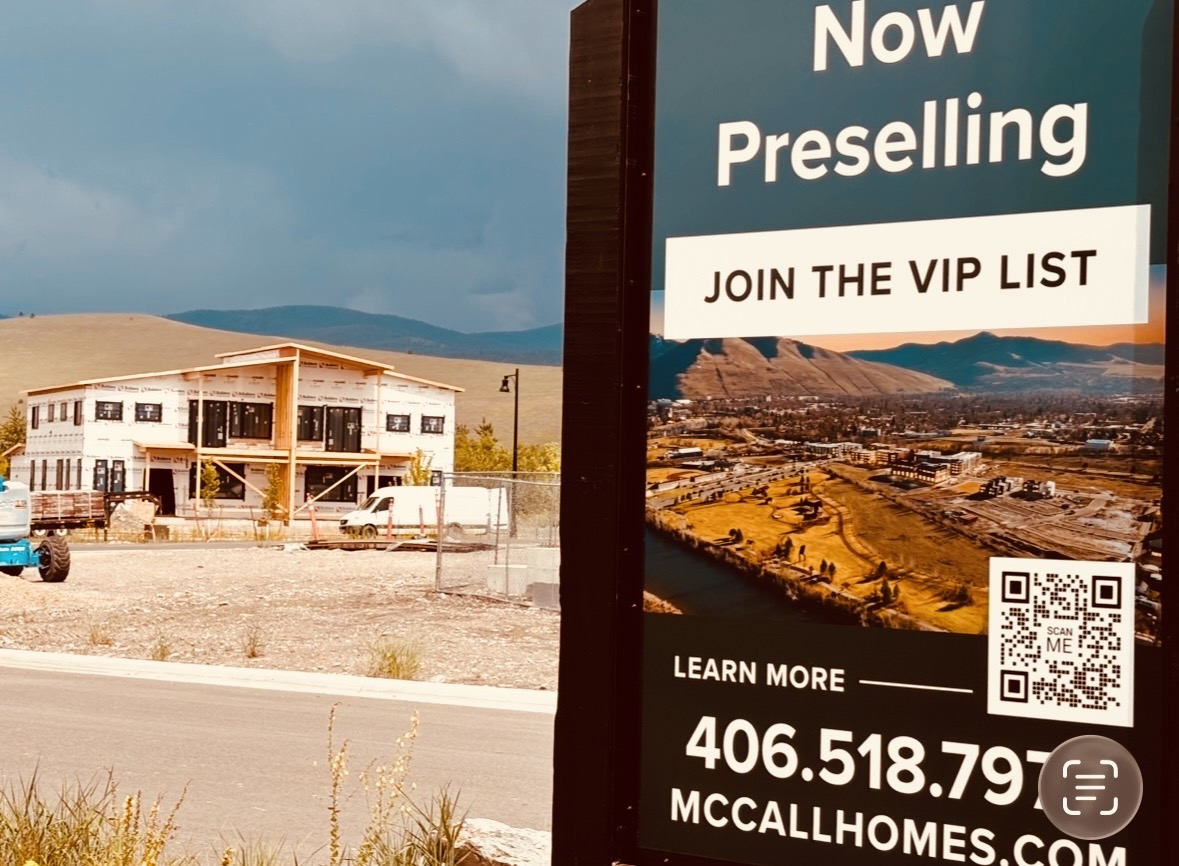
For more context on this part of Missoula being developed for people with deep pockets, it looks like Brad McCall, who is a part of the Land Use Task Force, is getting his piece of the pie.
Good for you, Brad!
One thing I bet the public would NOT push back on is a “solution” to the rampant drug addiction destroying multiple major cities, including adding to numerous issues in Missoula, so to really finish us off, here’s a screenshot of a money-shot about the company developing a protective anti-Fentanyl shot, with a little help from Two Bear Capital:

In my vision of the future trajectory for large-scale development in Western Montana, including data centers like Krambu, who’s ideal client would be “focused on biomedical studies“…
“Wood said his ideal client for the data center would be companies focused on biomedical studies, but he might not be able to find someone like that…”
…it’s going to be the public/private nexus of subsidized development surrounding technology, biomedical services, and the overlap of addiction and criminal justice reform, that will help shape this region’s future growth.
Creating healthier communities is entirely possible WITHOUT using tax subsidies to pad the profit-margins of developers, but getting there would require a radical departure from the political tribalism and paycheck protectionism that ensures regular people stay docile in their passive voting strategies. How’s that been working for y’all?
Anyone focusing on the CANDIDATES in Montana’s Senate race are, in my opinion, focusing on the wrong thing. Even focusing on just the money won’t work, because this is what following the money actually looks like:

Instead of seeing this chart and feeling demoralized, perhaps us regular people should look at this chart and see it as the boiled-down expression of DESPERATION and FEAR from the Epstein class that I believe it is.
But, again, don’t take my word for it.

If you appreciate a local, non-partisan focus so threatening to local elites they’re ankle-tracking my every movement, then please consider donating to my new GoFundMe page. Any little bit helps.
Thanks for reading!
CORRECTION: It’s Hal Fraser, not Hal Chase, but I left the original mistake because the same would be nice when paid local media mis-report on ME.

“…their main money man, Hal Chase…” I believe you mean Hal Fraser of First Security Bank, who is mentioned a bit further down in your post.
Thank you, I corrected it and left my original mistake, instead of stealth-editing, like Gomer Kidston.
Since I have you here, Pete, do you know the relationship between the Ellis’?
No.
Thank you for covering this, Travis!