
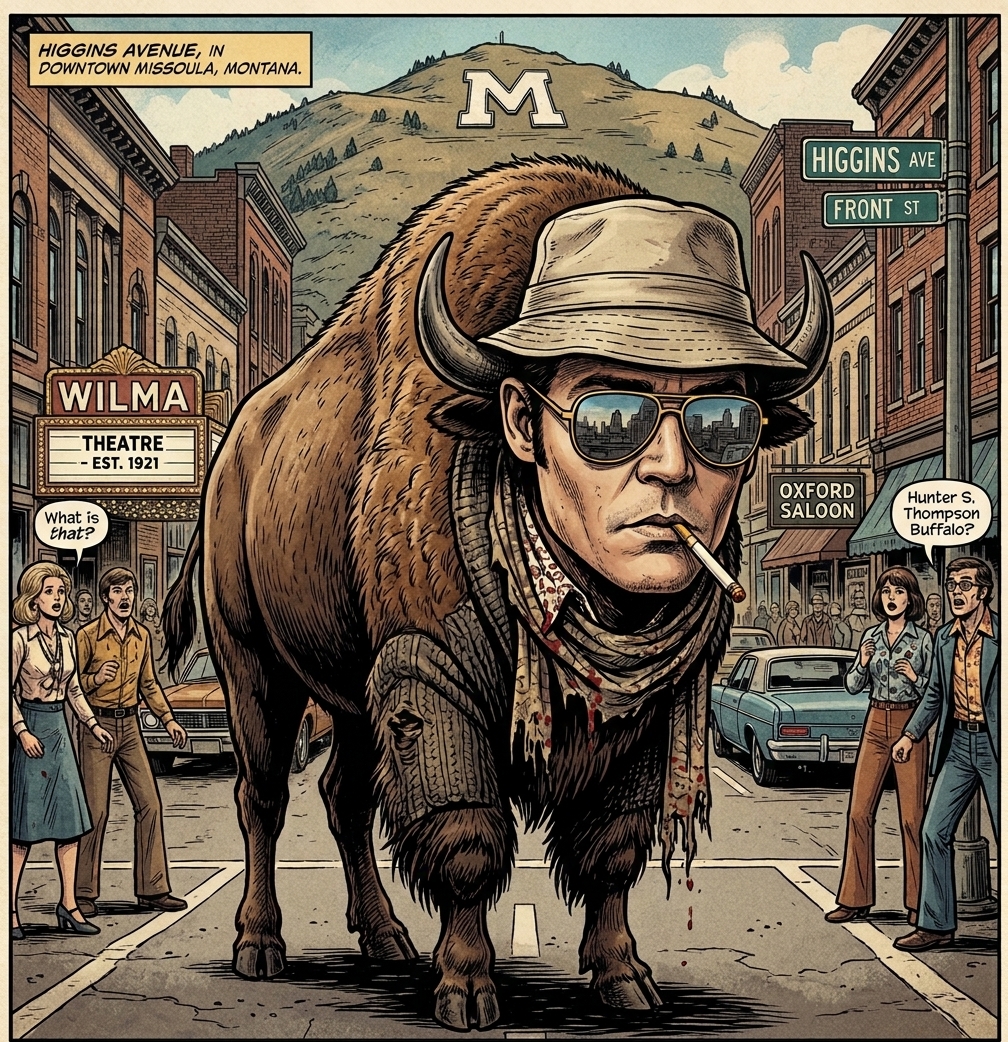
Long before movies transmitted information, and before even the printing press existed, news was spread by word of mouth. Here’s a bit of context from Wikipedia:
Before the printing press was invented, word of mouth was the primary source of news. Returning merchants, sailors, and travelers brought news back to the mainland, and this was then picked up by pedlars and traveling players and spread from town to town. Ancient scribes often wrote this information down. This transmission of news was highly unreliable and died out with the invention of the printing press. Newspapers (and to a lesser extent, magazines) have always been the primary medium of journalists since the 18th century, radio and television in the 20th century, and the Internet in the 21st century.
Continuing along the historical timeline, a period of “news” reporting at the end of the 19th century, called “Yellow Journalism“, featured circulation battles between the heavy hitters of information dissemination at the time, like Joseph Pulitzer and William Randolph Hearts:
Joseph Pulitzer purchased the New York World in 1883 and told his editors to use sensationalism, crusades against corruption, and lavish use of illustrations to boost circulation. William Randolph Hearst then purchased the rival New York Journal in 1895. They engaged in an intense circulation war, at a time when most men bought one copy every day from rival street vendors shouting their paper’s headlines. The term “yellow journalism” originated from the innovative popular “Yellow Kid” comic strip that was published first in the World and later in the Journal.
This type of reporting was characterized by exaggerated headlines, unverified claims, partisan agendas, and a focus on topics like crime, scandal, sports, and violence. Historians have debated whether yellow journalism played a large role in inflaming public opinion about Spain’s atrocities in Cuba at the time, and perhaps pushing the U.S. into the Spanish-American War of 1898.
The possibility of “inflaming public opinion” with newspapers and periodicals seems to be lurking around the document I’m highlighting today, brought to you by the Decoding Culture Foundation and PsyOp Cinema.
Considering how the phenomenon of “Gonzo Journalism” erupted from persona of Hunter S. Thompson, the focus of this file on what Hunter S. Thompson is reading is more than a bit ironic:

This document, dated February 3rd, 1971, was created about a year after the first appearance of “Gonzo” was said to have appeared. For those unfamiliar with this style of journalism, here’s what Wikipedia has to say about it:
Gonzo journalism is a style of journalism that is written without claims of objectivity, often including the reporter as part of the story using a first-person narrative. The word “gonzo” is believed to have been first used in 1970 to describe an article about the Kentucky Derby by Hunter S. Thompson, who popularized the style. It is an energetic first-person participatory writing style in which the author is a protagonist, and it draws its power from a combination of social critique and self-satire. It has since been applied to other subjective artistic endeavors.
Like most of the “counter-culture” figures I once admired, Hunter S. Thompson’s influence on “journalism” now appears much more problematic to me than it did when Fear And Loathing In Las Vegas came out in 1998 (the year I graduated high school and met my future ex-wife), but it was actually a movie from 1980 about Hunter S. Thompson that first put his writing on my radar.

Where the Buffalo Roam is a 1980 American semi-biographical comedy film which loosely depicts author Hunter S. Thompson’s rise to fame in the 1970s and his relationship with Chicano attorney and activist Oscar “Zeta” Acosta. The film was produced and directed by Art Linson.
While Art Linson only directed two movies, his executive producer work is what gave me my first connection to Missoula, where filming for Taylor Sheridan’s horsey porn show, Yellowstone, took place, which I wrote about extensively at the time, like this post documenting how a pissed off neighbor in the University Districted outed the ending of this obnoxious production that locals did NOT appreciate (more links at the post help make my case).
For context on Linson’s work with Taylor Sheridan, plus his involvement on the movie Into The Wild, which is based on the book by Jon Krakauer, who wrote his book about Missoula’s campus rape culture, here’s an excerpt from his bio:
Art Linson has produced movies in every decade since the seventies including Fight Club, Heat, The Untouchables, Fast Times at Ridgemont High, Into the Wild, and Melvin and Howard.
Linson was an executive producer on the long-running FX television series Sons of Anarchy (2008–2014), as well as Yellowstone, starring Kevin Costner. Yellowstone premiered on June 20, 2018, on the Paramount Network. Yellowstone has become the most popular scripted series in television. Linson is also an executive producer on the TV series 1883 and 1923.
It’s not just the Art Linson connection that connects Hunter S. Thompson to Big Sky Country. When I searched for more direct connections I found a Montana band that Thompson wrote liner notes for in 1960, and a visit to the University of Montana in 1976 that led to some interesting lore I’ll expound on after all the screenshots.
Here they are:


The story that Thompson scrawled DEATH TO THE WEIRD at Luke’s in Missoula does seem to be legit, since multiple people recollect it, and the word “weird” was said to have been purposely misspelled WIERD by Thompson.
From my vantage point the use of the word “weird”, along with Thompson’s proclamation of death to it in Missoula, almost feels like a prophecy. For context on this “weird” interpretation, here’s a post from July 30th, 2024, where I openly wondered why everyone was suddenly using the word WEIRD to describe JD Vance, who will be returning to Montana soon.
If that isn’t weird enough for you, the two-year old post also provides the history of how “KEEP MISSOULA WEIRD” was actually taken from a phrase describing Austin, Texas (a spot I’ve had several recent references to in the last few days).
Yeah, weird.
The Art Linson connection to Taylor Sheridan and Jon Krakauer is very interesting to me, and one that I’ll have more to say about soon, since the BIG TIME director, Denis Villeneuve, is one I’m helping PsyOp Cinema decode in a series of upcoming podcast episodes, so stay tuned!
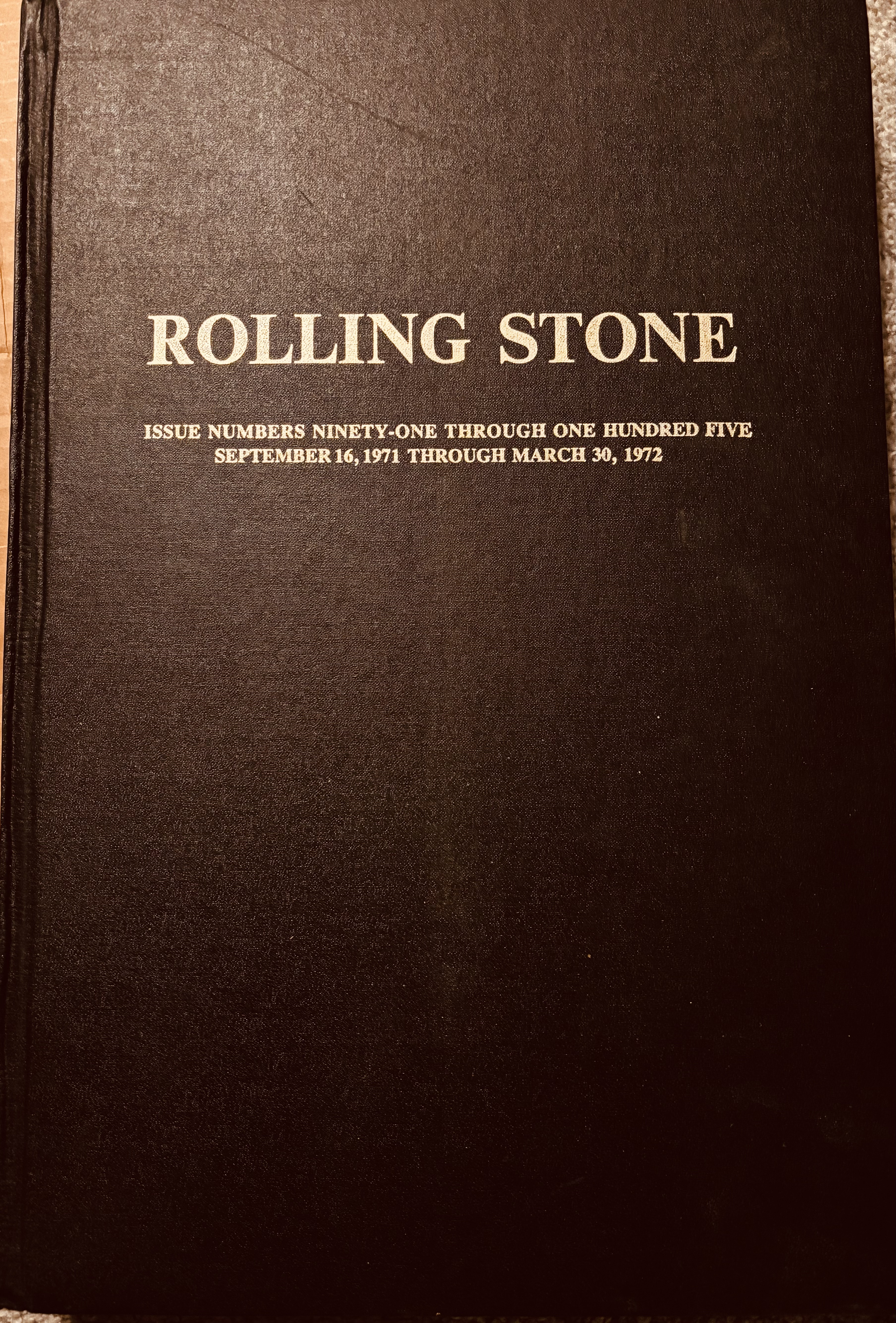
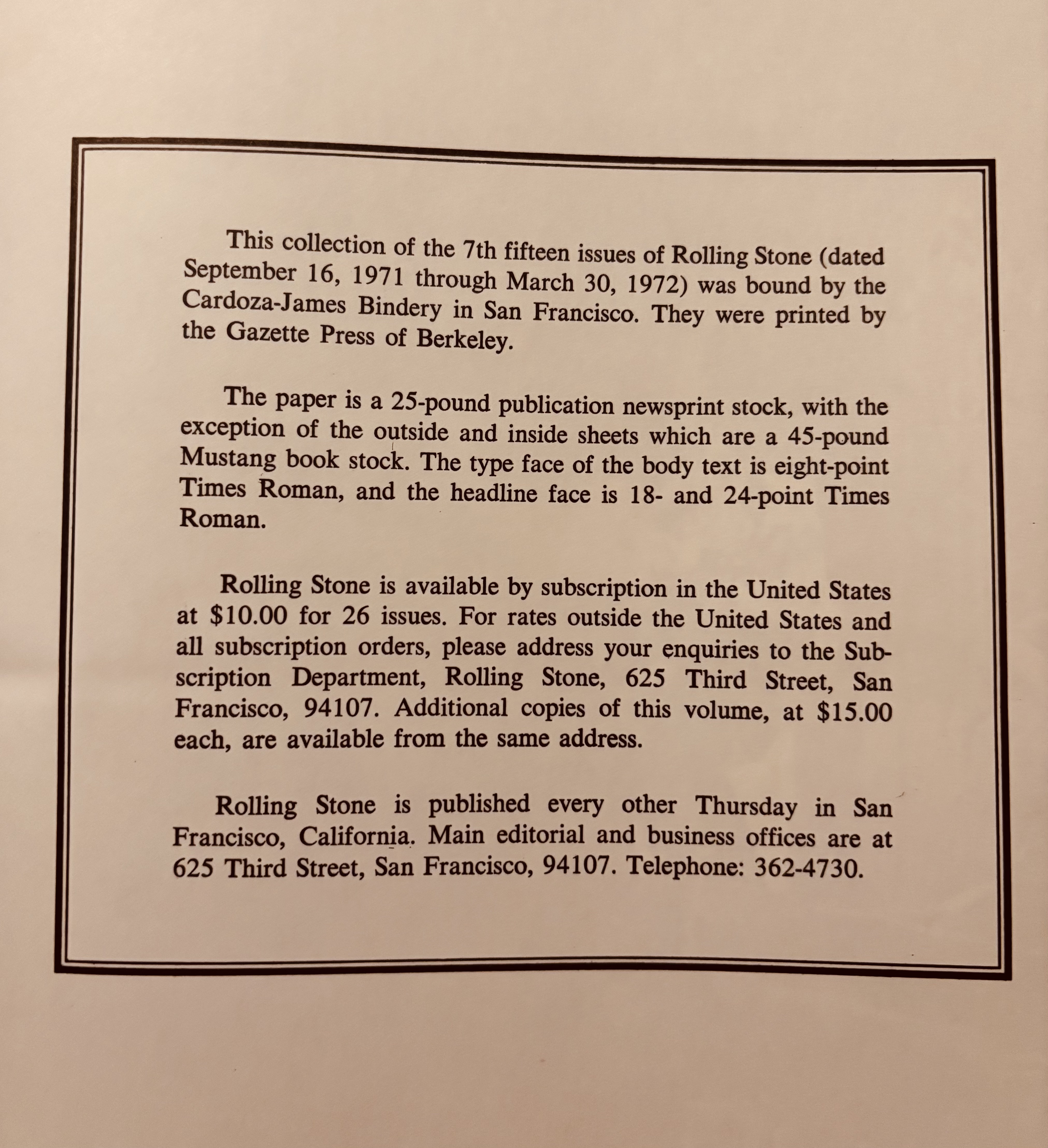
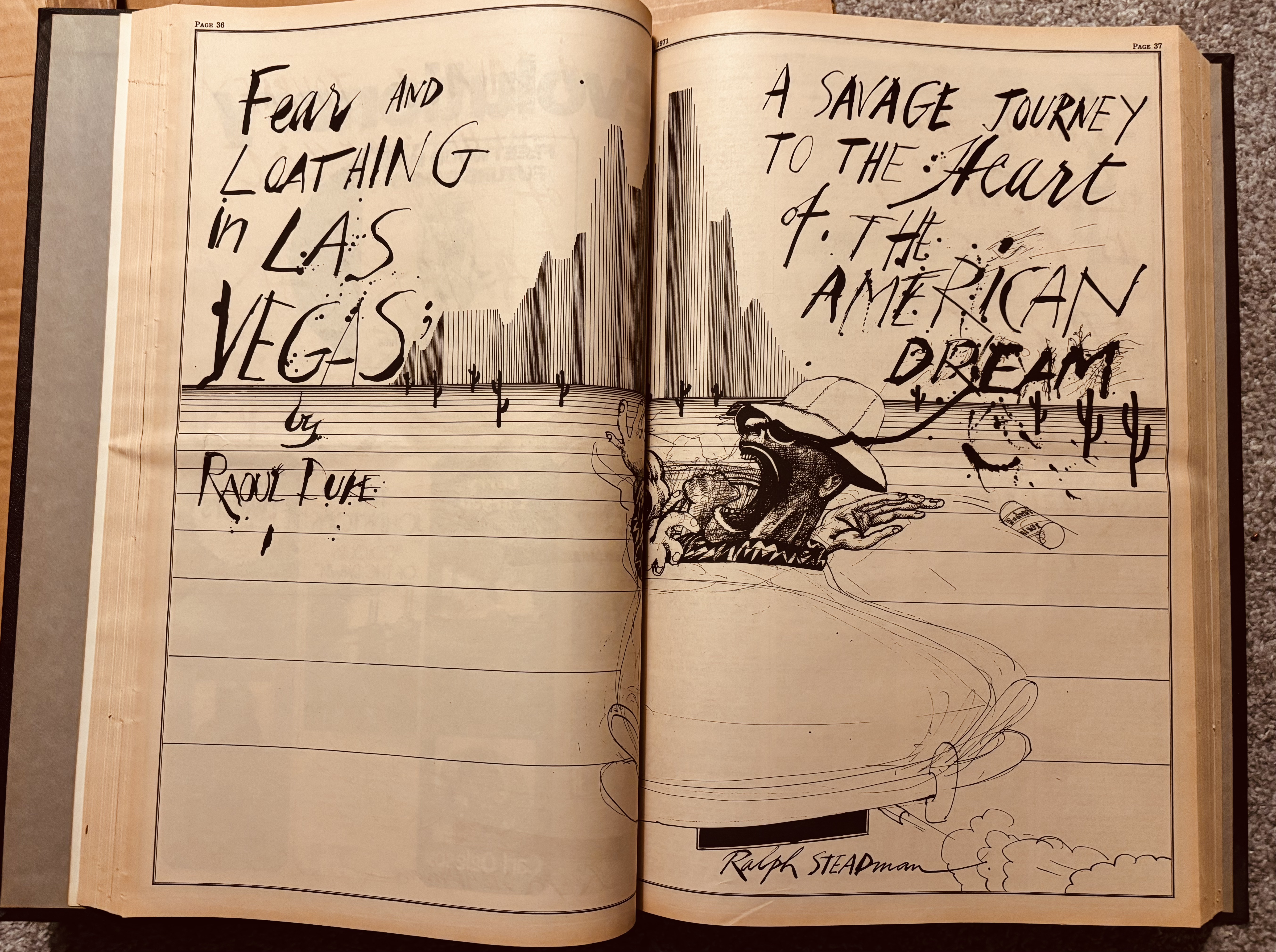
I almost forgot to conclude today’s post with a few images of a rare and costly Rolling Stone publication I invested in during my travels a few years ago, which took me all around the country. Here they are:
Thanks for reading!
